What Football Taught Us About the Gap Between Effort and Capacity
Written by David Howell, FitraVue
How working with the GB Police Women's Football Team revealed something we didn't expect and why it matters far beyond the pitch.
I want to tell you about a group of police officers who play international football and what happened when we stopped asking how they were performing and started asking what they were carrying.
Not their kit, not their injury history. I mean the load that life was already placing on each of them before they'd even walked through the door of a training camp. The weight of a demanding career in policing, personal pressures at home and the things that pile up between sessions that nobody on the coaching staff ever sees and, frankly, nobody ever thinks to ask about. The invisible baggage that every person brings into a team environment, whether anyone acknowledges it or not.
The GB Police Women's Football Team aren't a professional outfit. These are serving police officers, detectives, response officers, and firearms officers, who train in their own time, fund much of their own travel, and represent their country at international tournaments. All while doing one of the most demanding jobs in public service, think about that for a moment.
In the summer of 2025, they competed in the Euros in Germany, they finished fourth. I'm genuinely unbiased when I say that's a remarkable result, and I got to witness some of it first-hand.
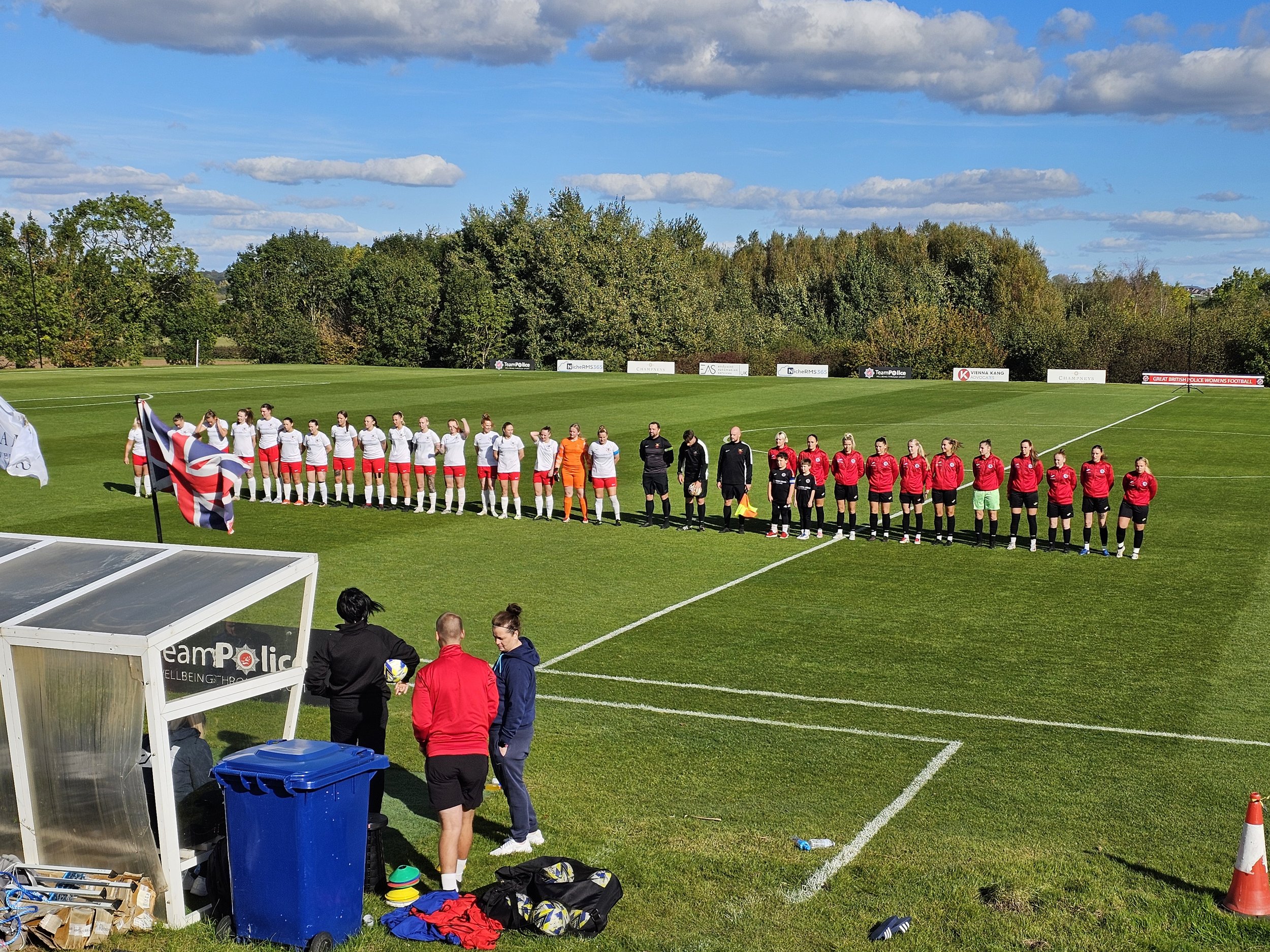
What happened before Germany and what we found when we actually looked properly at this squad, is what I want to share here.
The Question Nobody Was Asking
I spent thirty years in policing, one thing that experience teaches you, and I suspect anyone who's led a team of any kind will recognise this, is that people tend to ask the safe questions. How are you feeling? Are you managing? Are you still committed? They're reasonable questions, but they only surface what someone's willing to tell you in that moment, and people, quite understandably, tend to say what they think you want to hear.
I've always had what a close colleague once described as a "contrarian mind" a tendency to look not at the obvious question, but the one sitting just behind it. So when my co-founder, Junior Schoeman, and I started working with this squad, the question we brought was different. Not how are you performing, but what is actually being demanded of each person at work, in the team, in their lives and how does that interact with their natural capacity to handle it? Not as a welfare exercise, as a structural question.
This is what we built FitraVue to do. We surface the gap between what a system demands of people and what those people are genuinely built to handle. When that gap widens, when demand outpaces capacity, things don't collapse dramatically. They degrade quietly, decisions slow down, relationships become brittle, and effort continues, but coherence starts to drift. Nobody quite knows why.
In a police officer playing international sports in their spare time, the conditions for that gap are almost guaranteed. The wonder isn't that it exists, it's that nobody had ever looked for it.
What the Data Showed
We had roughly two weeks, one online session, and an hour with players and staff combined. That was it.
I want to sit with that for a moment, because it matters. Traditional approaches to understanding what's actually happening inside a team, observations, one-to-ones, and performance reviews, take weeks, sometimes months to compile. By the time the picture's drawn, the situation's already changed. New players have arrived, a coach has moved on, and someone's circumstances at work have shifted.
The map's out of date before anyone's read it.
FitraVue surfaces what's happening now, not what someone reported six weeks ago, not what they chose to share in a conversation they wanted to get right. The picture's immediate and unfiltered, one hour online, processed quickly, and we had a clearer view of this squad's complexity-capacity landscape than most organisations develop across an entire season. That speed isn't a shortcut. It is the point.
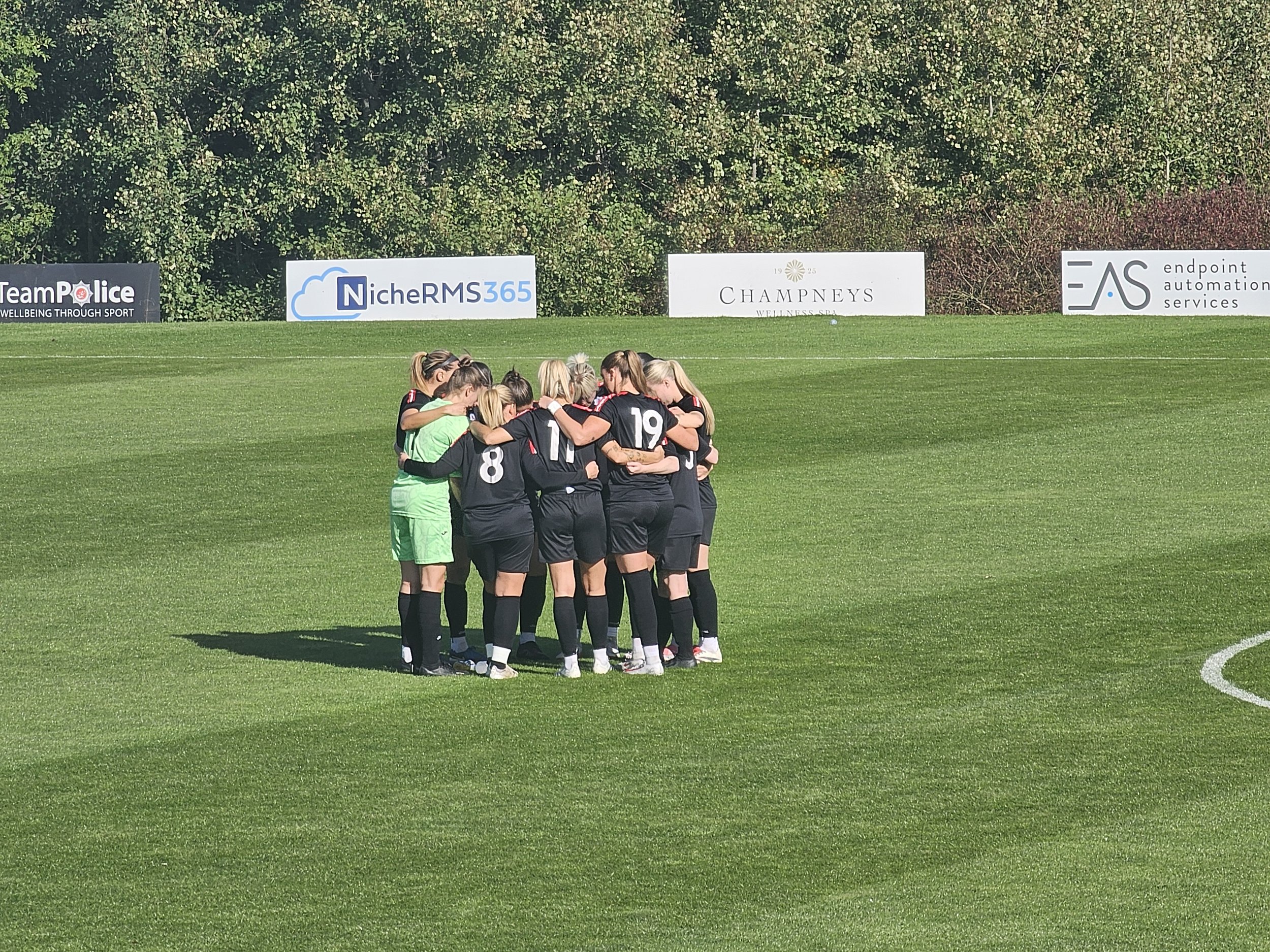
A few things emerged that genuinely surprised me.
First, the load across the squad was far from uniform. Individual players were carrying very different amounts across work, sport, and life simultaneously. Some were in high-load states, not because they were struggling in any visible way, but because the architecture of their lives had accumulated demand from several directions at once. Others showed what I'd describe as quiet withdrawal, not a lack of interest, but a low signal output that coaching observation alone would almost certainly have misread as disengagement.
Second, the coaching and management structure had a problem, which the data made quite stark. The tactical coaches were excellent, skilled and committed in their lane. But they were being asked to operate across types of challenges that needed a completely different way of thinking. Running a set piece is a structured, repeatable task. Managing the dynamics of thirty-odd serving police officers with competing careers, personal pressures, and very limited time together is not. I've seen this same mismatch in policing, put the wrong type of thinker into the wrong type of problem, and even genuinely good people will struggle. The data showed those two demands weren't being distributed well.
Third, and this is the finding that stayed with me most, several players weren't disengaged from the sport. They were disengaged from the conditions surrounding it. Career pressures within policing, the personal cost of giving up time to train and travel, often without any financial support. The accumulation of things that no coaching staff ever thinks to ask about. When we mapped this against each person's complexity profile, a pattern surfaced that no amount of coaching observation would ever have found.
And then there was the decision the manager made during the tournament itself. I think it deserves its own mention.
In a high-pressure, fluid match situation at the Euros, she chose to elevate a young coach, not a police officer, significantly younger than most of those around him, without the seniority that traditional thinking would have pointed toward into an effective second-in-command role. She gave him the authority to bring spontaneous, in-the-moment tactical thinking at precisely the point when everything was most unpredictable.
It was a brave call. It was also exactly the right one.
What the complexity data had already made visible before Germany, before a ball was kicked in the tournament, was that this individual had a high complexity capacity. An analytical mind naturally oriented toward reading fast-moving situations and offering perspectives that challenged conventional thinking. Not despite his relative inexperience, because of the way he processed the world.
She didn't need FitraVue to tell her he was talented. She already knew that, what the data gave her was something more specific a way of seeing why his contribution would be most valuable in exactly the kind of situation a tournament throws at you, fast, pressured, uncertain, rather than in the orderly routine of a training session. Complexity capacity and years of experience aren't the same thing. Sometimes, in the moments that count most, capacity matters more.
A Morning Walk at Champneys
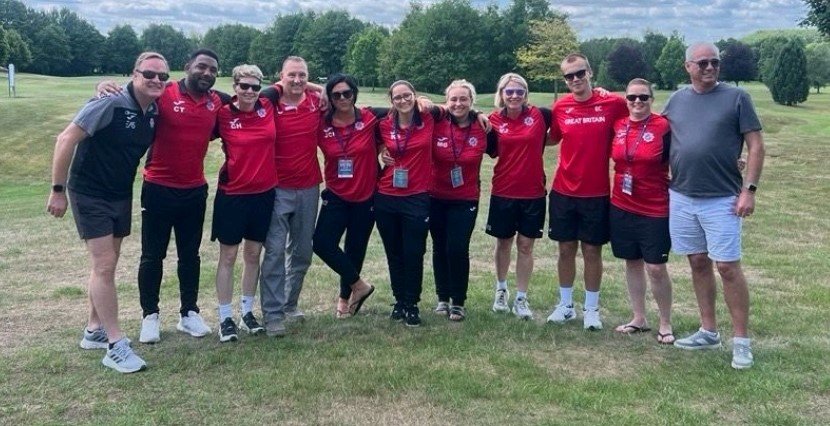
I want to be honest about something, FitraVue didn't improve this team's performance by handing anyone a set of tactics or a fitness plan, that's not what this work is.
What it did was give the management team genuine visibility of what was actually present in their group, rather than what they assumed was present. It gave individual players something equally valuable, a language for their own experience. A way of understanding why certain weeks or certain environments felt different to others. Not as a personal failing, as a simple fact about how load and capacity interact.
I attended the September 2025 camp at Champneys, Ashby De La Zouch. There were no formal sessions, no structured briefings. What I had instead was something that turned out to be far more revealing, a morning walk with some of the players. Unhurried, no agenda, away from the pitch and the schedule.
I've learnt over the years that the most honest conversations happen when there's nothing to perform. No coach watching, no notes being taken. Walking alongside someone at half seven in the morning with nothing to do but talk, the load they're actually carrying becomes audible in a way it never does in any formal setting. I've had the same experience many times in policing, it's in the quiet moments, not the briefings, that you find out what's really going on.
What struck me most was how much these women were carrying that had simply never been named. Sport is very good at talking about physical load and tactical load, it's much less good at acknowledging the weight of being a professional in a demanding public service role who also trains and competes internationally, in her own time, because she loves the game. That weight is real, until it's visible, it can't be accounted for.
What makes this work valuable beyond a single camp is precisely what happens between them. Players come in, coaches move on and roles shift. Each change in the squad's composition alters the picture, who's carrying a high load, who has more headroom, and how the dynamics between them are shifting. The data doesn't become less relevant as the squad evolves. It becomes more so, each new camp is a chance to ask, what's changed, and is this team moving toward coherence or quietly drifting away from it?
Why This Matters Beyond Police Sport
This squad is a particular case, but the issue it illustrates isn't.
Most teams at most levels operate on assumptions about what their people are experiencing they observe behaviour, read moods and check in, but often that's enough. Those approaches share a common limitation, they can only see what's already visible. They can't see the gap between what a person is being asked to carry and what their current capacity actually allows and that gap is where most performance problems begin.
Not in a lack of effort, not in a tactical shortfall. In a mismatch between demand and capacity that builds quietly and then surfaces as something else entirely, an injury, a rift, a player who seemed absolutely fine right up until they weren't. Anyone who's led a team for any length of time will recognise that description.
While I was writing this, another story was running through my mind. Bodø/Glimt, a club from a small Arctic city in Norway, eliminated Inter Milan from the Champions League, winning 3-1 in Norway and 2-1 at San Siro. Five to two on aggregate, the football world reached for the obvious explanation a former fighter pilot hired as a mental coach. Vivid story, easy to remember and almost certainly not the real one.
When you look past the headline, what Bodø/Glimt had actually built over a decade was something far less dramatic and far more instructive. A stable playing identity under the same manager for years. A recruitment model built around fit rather than spend, because they couldn't afford to get it wrong. A psychological layer that wasn't a pre-match speech but a structural feature of how the club operated, accumulated over time and data-backed scouting designed to reduce selection error before anyone pulled on the shirt.
In other words: coherence. The kind of internal alignment meant when Inter arrived with their budget and their status, they found a system that didn't blink. Inter dominated possession and shot volume in the second leg. They still lost 2-1, that's not an inspired underdog. That's a tighter architecture meeting a team that confused owning the ball with owning the game. Most teams do the same thing with their people, plenty of activity, plenty of observation, plenty of check-ins and still can't see what's actually happening underneath it all.
Here's the part that interests me most, though. Bodø/Glimt built that coherence through years of iteration, patience, and institutional memory. It's a remarkable achievement, and it still left something invisible. Which players were carrying the load from outside the club that narrowed their capacity window in the knockout phase? Whether the psychological stability attributed to the military mind was genuinely distributed across the squad or resting on three or four individuals who absorbed the weight for everyone else? How did the load distribution shift as the tournament wore on and fatigue compounded with complexity? None of that was visible to them, they got the result but they were still flying partially blind.
The question worth asking in any team environment, professional or amateur, Arctic Norway or Ashby De La Zouch isn't just "how are my people feeling?" It's: "Do I have genuine visibility of what they're carrying, and does that align with what this environment actually demands of them?"
The GB Police Women's Football Team gave us the opportunity to show that this kind of visibility isn't only possible, it's practical and it doesn't take a decade to build.
Two Teams, One Gap
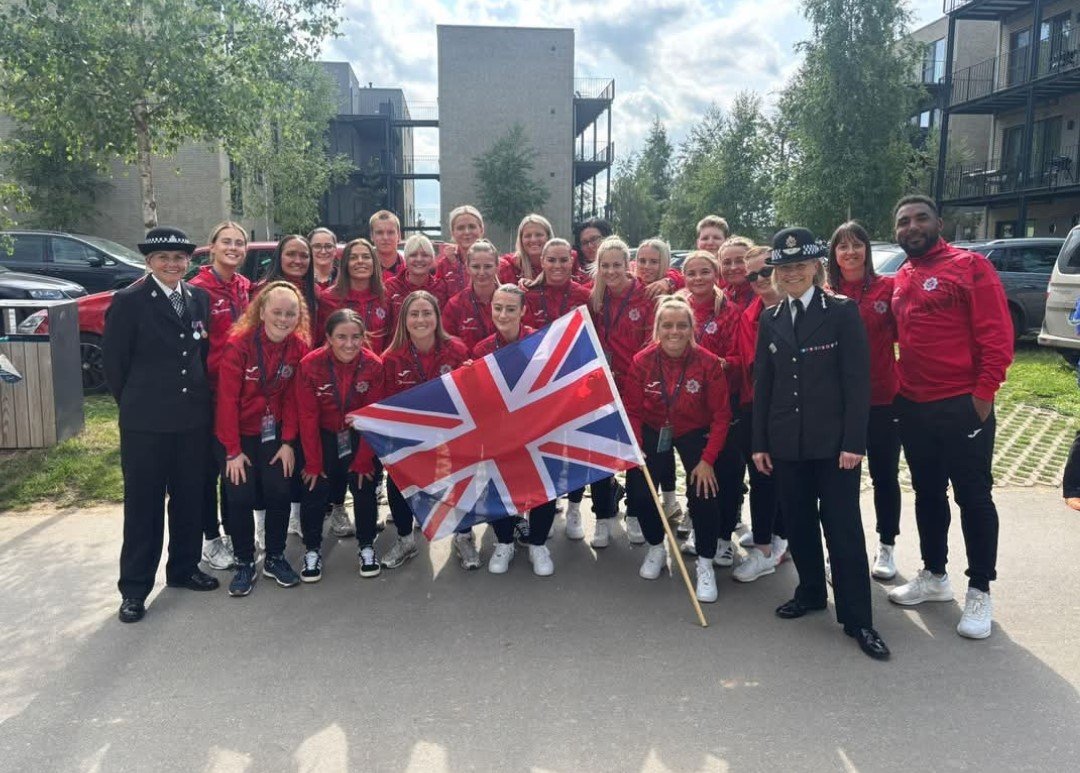
I find it genuinely striking that two such different clubs, from such different worlds, point at exactly the same missing question.
Bodø/Glimt are a professional outfit, a full-time squad, a dedicated coaching staff, a scouting network, and the resources of a Champions League campaign. The GB Police Women's Football Team are serving police officers who train in their spare time and fund much of their own travel. One plays in front of thousands at San Siro, the other plays in front of colleagues and families at grounds most people couldn't find on a map.
And yet the invisible gap in both systems is identical. What are these people actually carrying? Not in their training load, not in their tactical preparation. In the whole of their lives, the weight that arrives with them before anyone's kicked a ball and how does that interact with what their environment is demanding of them right now?
There's something else the two clubs share that nobody talks about. Bodø/Glimt couldn't afford to get recruitment wrong, no rich owner to absorb a bad decision. Every signing had to fit the system, because there was no financial buffer between a mismatch and a crisis. That constraint forced a discipline that wealthier clubs rarely develop, the habit of asking not just 'is this person good?' but 'does this person fit what we're building?' The GB Police Women's Football Team operate under the same logic, but with people rather than transfer fees. There's no budget to replace a player who's carrying too much to contribute, every person has to count.
Bodø/Glimt approximated the answer through years of careful selection, stable identity, and a mental coach who was part of the furniture rather than a headline stunt. They got close, close enough to beat Inter, but the picture was still inferred rather than seen and 'inferred' has a cost. Then you can't see which players are carrying load from outside the club, you can't account for it. You can't have the conversation upstream, you react when something surfaces, an injury, a dip in form, a player who seemed absolutely fine right up until they weren't.
The sharpest difference between the two teams isn't budget or profile, or the level of competition they face. It's this, when the GB Police Women's Football manager promoted a young coach into a pivotal role during the tournament, she wasn't just following instinct. She had seen, in the data, that his complexity capacity was built precisely for that environment, fast, fluid, uncertain. Bodø/Glimt had no equivalent, their selection decisions, however sharp, were still made from observation. Watching how people behave and inferring what they can handle, that's better than most. It's still not the same as seeing.
We got to a comparable picture in an hour, one online session. Two weeks before a tournament.
That's not because what we did was cleverer than what Bodø/Glimt built. It's because instrumentation does in an hour what observation takes years to approximate and even then only gets partway there. The invisible load doesn't announce itself, it has to be surfaced and once it's surfaced, it stays visible not just for one camp, but for every camp that follows. Not just for this squad, but for every squad whose composition shifts between sessions.
Starting at Twelve
Everything I've described here applies to adults, but it doesn't have to start there.
FitraVue's instruments can be used from the age of twelve and at twelve, the picture's no less complex. A young player arriving at training is already carrying something, school pressures, home circumstances, peer relationships, the quiet weight of being told they're talented before they fully understand what that means or what it might cost them, none of that's visible on the pitch. All of it shapes what they can access when the moment demands it.
Most junior development programmes watch what young players do. Very few have any means of understanding what those players are carrying while they're doing it. That gap matters enormously, because a twelve-year-old who appears inconsistent or disengaged may not be struggling with the sport at all. They may be struggling with everything else, and bringing it onto a pitch that has no framework for seeing it.
This becomes even more significant when you consider the decisions sport asks young people to make at increasingly early ages. The path to professional football is presented as a direction of travel: commit now, specialise now, choose now. These are life-changing decisions. They're routinely made on the basis of what a young person looks like on a training pitch on a given Tuesday evening, almost nothing else.
Knowing a young player's complexity-capacity profile, what they're built to handle, what they're currently carrying, how those two things interact, doesn't make that decision for them, but it gives the people around them something they very rarely have, an informed basis for the conversation that follows.
The Mentoring Dimension
The GB Police Women's Football Team is now developing a mentoring programme for its players, designed to support them not just in sport but in their careers in policing and in life beyond it. I think that's exactly the right instinct and it brings everything I've described into sharpest focus.
Mentoring, done well, is one of the most powerful development relationships there is. I've been fortunate to have had good mentors in my own career and I know the difference they make. But mentoring is only as good as the understanding the mentor brings to the person sitting in front of them. Historically, that understanding has been built almost entirely from what's visible, rank, experience, performance record, whatever the player chooses to share when asked how things are going.
What FitraVue makes possible within a mentoring framework is something genuinely different. A mentor can enter that relationship with real visibility of where the person they're supporting actually sits across sport, career, home life, and social pressures, all at once. Not what the player projects, not what they think the mentor wants to hear. What's actually present across the whole of their life, mapped against their natural capacity to process it.
That changes the relationship entirely, a player who appears confident on the pitch may be carrying a significant load elsewhere. A player who seems disengaged at training may be operating at the very edge of their capacity across four other domains simultaneously. A player who looks like an obvious candidate for leadership development may be at a point in their life where adding that demand would push things in completely the wrong direction or may be precisely the person who needs that challenge right now. Without the data, you're guessing and with it, you can actually see.
None of this is visible from the touchline, all of it becomes visible with the right instrumentation.
It goes further than getting the initial pairing right, this isn't a one-time snapshot, FitraVue monitors drift. As a player's life changes, new pressures at work, a shift in personal circumstances, a different role within the squad, their picture shifts with it. That means a mentor can have the right conversation at the right time, not because something's already gone wrong but because the data showed the load was building before it did.
In policing and in aviation, I learnt that the most valuable safety systems aren't the ones that respond to failure. They're the ones that see it coming. Sport has historically been good at the downstream response, support when someone's visibly struggling, a conversation when the friction has already become a rift. Those responses matter, but they're always late.
What this mentoring framework makes possible, informed by FitraVue's ongoing view of the picture, is the upstream conversation. Not 'we noticed something was wrong, but 'we could see the load building before anything went wrong, and we had the conversation then.' That's a different quality of care entirely and in the context of a squad of police officers managing careers, family life, financial pressure, and international sport simultaneously, it may be the most valuable thing a mentoring programme can offer.
Matching the right mentor to the right mentee. Monitoring how that relationship develops over time. Seeing where the load is drifting before either person has the language to name it. Making the invisible visible not once, but continuously.
Fourth Place in Germany
I was on the touchline at Champneys watching the squad train in September 2025. They were the better team, technically sharp, tactically disciplined, more cohesive than any comparable group I've had the pleasure of watching.
What I noticed most that morning was harder to put into words, the players knew more about themselves and each other than they had before. They had language for things that had previously gone unnamed, they could have conversations about load and capacity that most teams, at any level, never get to have. That, to my mind, is its own kind of result.
Fourth place in the Euros. In Germany. Representing policing. In their own time.
The result mattered, but what this squad started in how we think about the human picture inside a sports team, may matter more, and for much longer.
There's a club in Arctic Norway that spent a decade building something similar through instinct and iteration. The football world called it a miracle when they knocked out Inter Milan. It wasn't a miracle. It was alignment, imperfectly seen, hard-won over years, and still only partial. What happened in a hotel in Ashby De La Zouch, in a morning walk before the schedule started, was the same thing that surfaced in an hour. Two very different teams. The same invisible gap, the same question that nobody else was asking.
And here's the question I keep coming back to, long after the data's been processed and the camp's a memory:
If the person carrying the most weight in your organisation isn't the one lifting the trophy, if it's the kit manager running between three teams on a Saturday morning, or the analyst sleeping in hotel rooms six weekends a year, or the CEO holding together sponsors, board members, and a dressing room full of competing pressures, would you know? Not what they tell you when you ask. What they're actually carrying, right now, before they walk through the door?
Sport has always understood that performance is a human endeavour. What it hasn't yet fully reckoned with is that human beings don't arrive empty. Every person in your organisation, from the kit room to the boardroom, is carrying something. The only question is whether you can see it.
About the Author
David Howell is the co-founder of FitraVue. He spent thirty years in policing — including as Base Manager at the Metropolitan Police Air Support Unit at Lippitts Hill — before turning his attention to the questions that organisations consistently fail to ask about the people inside them. He is the author of Speak Up, Listen Down (2022). | fitravue.com