Long‑Term Player Development
Why Kids Don’t Grow in Straight Lines
Written by Karl Dewazien
For as long as I’ve been around the game, one thing has always puzzled me….
Why are we in such a hurry to create “expert children”?
We draw neat diagrams and tidy pathways that make development look like a straight line, Stage 1, Stage 2, Stage 3, onward and upward, but anyone who has ever coached a group of five‑year‑olds (or raised a teenager!) knows the truth:
Kids don’t grow in straight lines.
They grow like jigsaw puzzles.
Pieces click in at different times.
Some pieces show up early.
Some hide for a while.
Some flip upside‑down before they finally make sense.
That’s not a flaw in the system, that is the system
The Problem With Rushing the Journey
Somewhere along the way, adults started treating development like a race. We push kids through stages as if the goal is to “finish” childhood as quickly as possible, but when we rush:
• We skip over the joy
• We skip over the exploration
• We skip over the messy, magical learning that actually builds the player
Worst of all… we lose kids, the dropout numbers tell the story. Kids don’t quit because the game is too simple, they quit because the game stops feeling like their game.
Seeing Development as a Puzzle, Not a Ladder
When we shift from a linear mindset to a puzzle mindset, everything changes.
Instead of asking: “What stage should this child be in?”
We start asking: “What pieces are ready to click in today?”
That’s where the real coaching happens, not in rushing, but in noticing. Across every age group, you’ve mapped out what kids are ready for emotionally, physically, socially, and cognitively and not what they “should” be doing, but what they can joyfully take on.
Here’s how those puzzle pieces tend to fall into place:
Ages 4–6: The Spark Stage
Kids at this age need:
• freedom
• movement
• silliness
• tiny victories
• and a game that feels like play
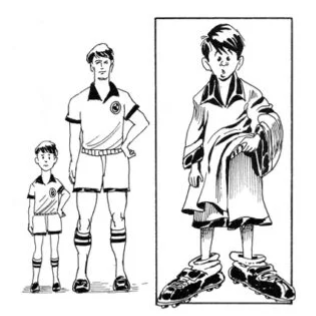
This is why small‑sided games, especially Quad‑Goal Soccer, work so beautifully. They give kids more touches, more decisions, more smiles, and more chances to fall in love with the game.
This is the stage where the spark is lit. If we protect it, it becomes a flame.
Ages 7–9: The Discovery Stage
Now the puzzle pieces start clicking faster:
• teamwork
• simple tactics
• problem‑solving
• emotional ups and downs
Kids begin to understand the “why” behind the game but they still need space to explore, not pressure to perform.
This is where adults often rush, but if we slow down, kids speed up.
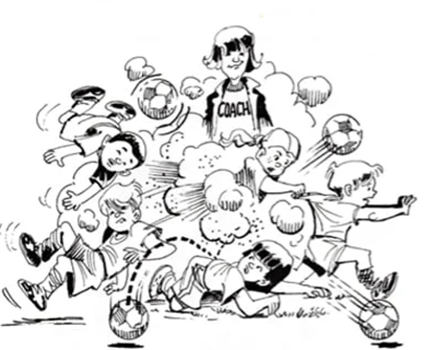
Ages 10–12: The Growth Stage
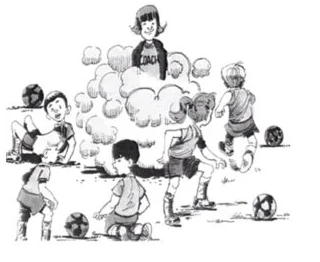
This is the golden window:
• coordination improves
• confidence grows
• friendships deepen
• creativity explodes
Kids at this age thrive when we give them challenges that stretch them without overwhelming them. They’re ready for more structure but not adult‑level expectations.
This is where the puzzle starts to look like a picture.
Ages 13+: The Identity Stage
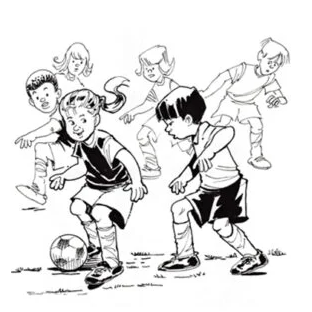
Now the real magic happens:
• Who am I as a player?
• Who am I as a teammate?
• Who am I as a person?
This is the stage where kids either stay in the game or walk away. The biggest predictor of staying? Whether they fell in love with the game early. Not whether they were “ahead” at age 8, whether they played in the “top” group or whether they mastered every stage on schedule.
Love keeps them in the game. Pressure pushes them out.
So, Why Are We Rushing?
Maybe because adults love checklists, maybe because we like feeling in control or maybe because we forget what it felt like to be small, but kids don’t need us to rush them. They need us to see them and they need us to understand that development is not a ladder, it’s a puzzle and every piece matters.
A Simple Question for Every Coach
Instead of asking:
“How fast can we move them through the stages?”
Let’s ask:
“What does this child need today to grow with joy?”
That one question changes everything.
Want to Explore This More?
Karl has a full “Knowing the Player” breakdown across all age groups — a treasure chest of insights for coaches who want to understand the whole child, not just the athlete.
You can explore it here by scrolling down:
And for those curious about how small‑sided formats support long‑term development, especially in the early years, take a look at Quad‑Goal Soccer:
👉 New Rules, Big Thrills: A World of Possibilities! – Fundamental Soccer
About the Author
Karl Dewazien began his football career at Fresno Pacific University, where he graduated as the programme's all-time leading scorer before being appointed head coach, initially as a player-coach, and served in that role for five seasons. Fundamentalsoccer went on to become one of the foremost figures in American soccer development, serving as California Youth Soccer Association State Director of Coaching from 1978 to 2012, during which time he licensed an average of 3,000 coaches per year and helped shape the sport's growth across the country. A prolific author, his "FUNdamental Soccer" book series became a cornerstone resource for youth coaching worldwide, with his practice book translated into Spanish, Japanese, and Chinese, the latter distributed by the People's Republic of China to youth coaches across the country. His "Modified Laws of the Game" for youth players became the standard across the United States and Canada, and he has been inducted into multiple Halls of Fame in recognition of his lifelong contribution to the game.